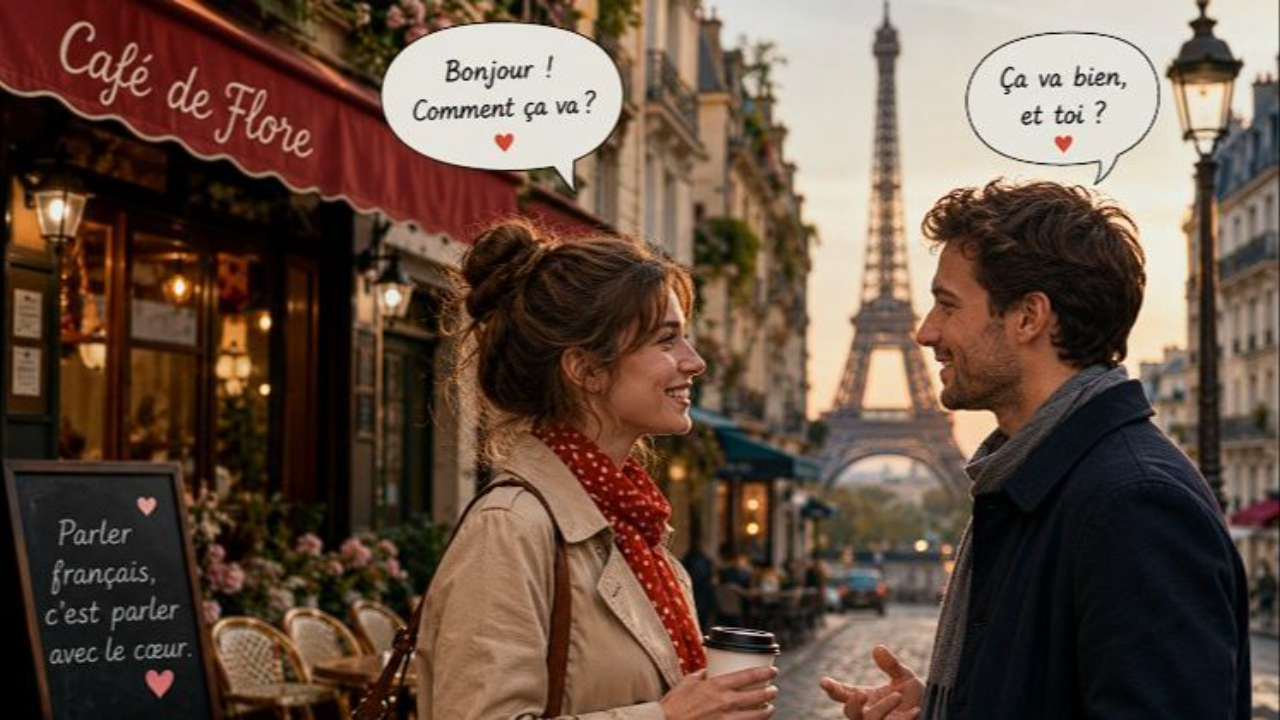
Everyday French Expressions Explained in English
Jul 06, 2026
Published July 6, 2026 · 7 min read
Learning French vocabulary matters, but if you want to sound natural and speak with confidence, you also need to master everyday French expressions. These are the phrases native speakers actually use in daily conversations, and they help you connect more easily and speak French more fluently.
Whether you are an expatriate living in Dubai, Abu Dhabi, or anywhere else in the UAE, learning practical French expressions makes your language journey more enjoyable and far more effective. In this guide you will discover essential French expressions, their English meanings, pronunciation tips, and real-life examples so you can start using them naturally today.
Why learn everyday French expressions?
French expressions are groups of words that native speakers use regularly in conversation. Some can be translated word for word into English, but many carry cultural meaning that is part of what makes French such a rich and beautiful language.
Learning these expressions helps you:
- Sound more natural when you speak French
- Improve your listening comprehension
- Understand French films, podcasts, and songs
- Communicate confidently in real-life situations
- Gain a deeper understanding of French culture
Instead of speaking word by word, you start to think and communicate in complete expressions. That shift is exactly what separates a hesitant beginner from a confident speaker.
List of essential French expressions
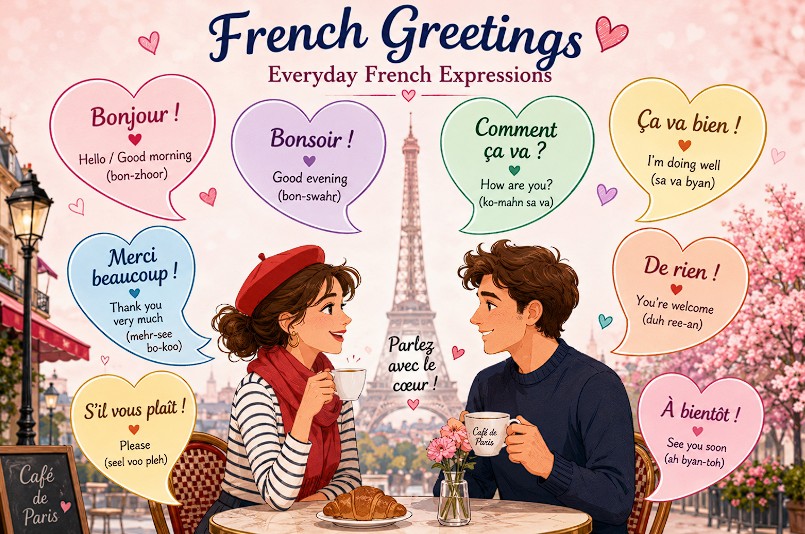
Here are some of the most useful French expressions every learner should know, with their meaning and a simple pronunciation guide.
| French expression | English meaning | Pronunciation |
|---|---|---|
| Bonjour | Hello / Good morning | bon-jhoor |
| Bonsoir | Good evening | bon-swahr |
| Comment ça va ? | How are you? | ko-mahn sa va |
| Ça va bien | I’m doing well | sa va byan |
| Merci beaucoup | Thank you very much | mehr-see bo-koo |
| De rien | You’re welcome | duh ree-an |
| S’il vous plaît | Please | seel voo pleh |
| Excusez-moi | Excuse me | ex-kew-zay mwah |
| À bientôt | See you soon | ah byan-toh |
| Je ne comprends pas | I don’t understand | juh nuh kom-pran pah |
Pronunciation tip
French pronunciation often differs from spelling. Listening to native speakers and repeating expressions aloud will improve your speaking far faster than reading alone. Many language apps and online resources include audio recordings that help you master authentic pronunciation.
How to use French expressions in real conversations
Memorising expressions is useful, but using them in conversation is what really counts. Pair these expressions with the French Filler words natives use between sentences to sound even more natural. Imagine meeting a French-speaking colleague in Dubai:
Person A : Bonjour ! Comment ça va ?
Person B : Ça va bien, merci. Et vous ?
Person A : Très bien, merci.
Person A : Hello! How are you?
Person B : I’m doing well, thank you. And you?
Person A : Very well, thank you.
By learning complete exchanges rather than isolated words, you become far more comfortable taking part in everyday conversations.
Want to pronounce these expressions like a native?
Book a free discovery call with Murielle and try a real French lesson, from anywhere in the UAE.
Book my free discovery call →Examples of common French expressions
Here are more expressions that appear all the time in daily life, with their meaning and a short example.
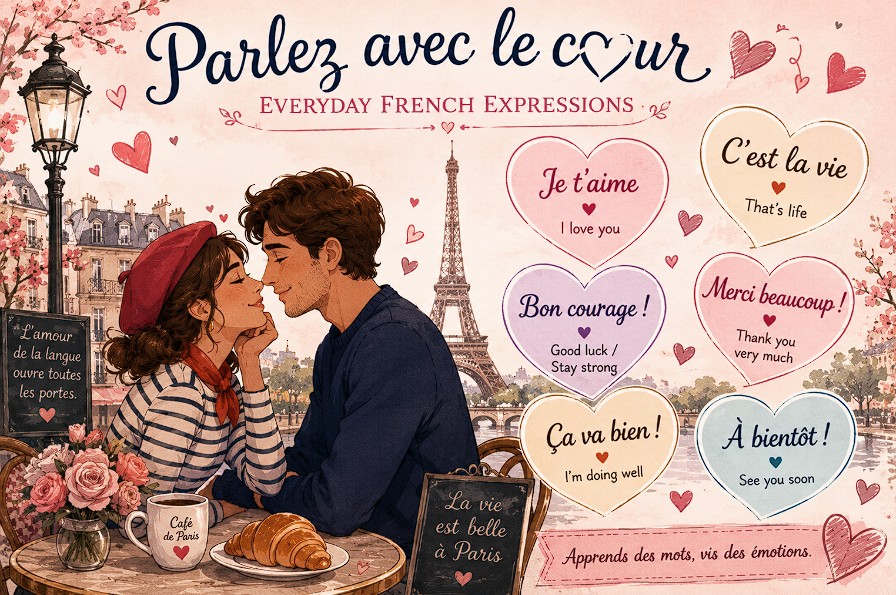
C’est la vie
Meaning : That’s life. Used when accepting a situation you cannot change.
Mon train est en retard. C’est la vie.
My train is late. That’s life.
Bon courage
Meaning : Good luck / Stay strong. French speakers often use this before someone faces a challenge.
Tu as un examen demain ? Bon courage !
You have an exam tomorrow? Good luck!
Ça marche
Meaning : Sounds good / That works.
Rendez-vous à 18h ? Ça marche !
Meet at 6 pm? That works!
Pas de problème
Meaning : No problem. A handy expression for almost any everyday interaction.
French expressions by situation
Different situations call for different expressions. Learning them by category makes them much easier to remember.
Greetings
- Bonjour
- Bonsoir
- Salut
- Enchanté(e)
At work
- Je suis disponible.
- Merci pour votre aide.
- À demain.
Shopping
- Combien ça coûte ?
- Je voudrais ceci.
- Merci beaucoup.
Traveling
- Où est la gare ?
- Pouvez-vous m’aider ?
- Je cherche un hôtel.
Friendly conversations
- Ça va ?
- À bientôt.
- Bonne journée.
Tips to learn and remember French expressions
Learning expressions becomes much easier when you use them regularly. Here are five habits that work.
Practice daily
Choose three new expressions each week and use them in conversations or short writing exercises.
Create flashcards
Write the French expression on one side and the English meaning on the other, then test yourself.
Listen to native speakers
French podcasts, YouTube videos, and films expose you to authentic usage and pronunciation.
Repeat out loud
Speaking builds confidence and improves your pronunciation more than silent reading ever will.
Use expressions in context
Instead of memorising isolated phrases, build complete sentences. For example:
- Bonjour, comment ça va ?
- Merci beaucoup pour votre aide.
- À bientôt !
This method helps expressions stay in your memory much longer. If you want structure and feedback, our A0 absolute beginner course introduces these phrases with their natural pronunciation from your very first lesson.
Why expressions improve your fluency
Many learners focus heavily on grammar and vocabulary. Both are important, but real fluency comes from understanding how native speakers actually communicate.
French expressions:
- Increase your speaking confidence
- Improve your listening skills
- Help conversations flow naturally
- Reduce the need to translate from English
- Make your interactions more authentic
Once you know common expressions, you spend less time thinking about individual words and more time focusing on communication. It is one of the fastest ways to progress from beginner to intermediate French.
Cultural insights behind French expressions
French expressions often reflect the values and culture of French-speaking communities. For example:
- Bon appétit reflects the importance of sharing meals.
- C’est la vie shows a practical acceptance of life’s challenges.
- Bon courage demonstrates empathy and encouragement.
Understanding these cultural nuances lets you connect more deeply with the language and the people who speak it.
Ready to actually speak French?
Whether you are a complete beginner or preparing for the DELF exam, we offer private French courses tailored to expatriates in Dubai, Abu Dhabi, and across the UAE.
See our course options →FAQ about French expressions
Quick answers to the questions learners in Dubai and the UAE ask most often. Tap a question to open it.
What are French expressions?
French expressions are ready-made phrases that native speakers use automatically in daily life, from a quick Ça va ? to a philosophical C’est la vie. Some translate word for word, but many are idiomatic, so their real meaning goes beyond the individual words. Learning them as complete blocks, rather than translating in your head, is what makes you sound natural and helps you follow real conversations.
How many French expressions should beginners learn?
Start with 20 to 30 high-frequency expressions, the greetings, politeness formulas, and phrases you need every day, then build towards a hundred or so over a few months. How well you use them matters more than how many you know: a handful of expressions you actually deploy in conversation will serve you better than a long list you only recognise on paper.
Are French expressions difficult to pronounce?
A few contain sounds that are unfamiliar to English speakers, such as the nasal vowels in bien or the French r, along with silent letters and liaisons. None of it is out of reach. Regular listening, followed by saying each phrase out loud, is the fastest route, and having a native teacher correct you in a live lesson removes most of the guesswork.
Can learning expressions improve fluency?
Yes, significantly. When you store whole expressions instead of isolated words, your brain retrieves them as single units, so you spend less time translating and more time communicating. That chunking effect is one of the quickest ways to move from hesitant sentences to a natural, confident flow.
Should I learn expressions or grammar first?
You do not have to choose. Expressions give you quick, motivating wins you can use immediately, while grammar gives you the structure to build your own sentences later. The most effective approach runs the two in parallel: learn practical expressions for real situations, then pick up the grammar that explains why they work.
Which French expression should I learn first?
Begin with Bonjour and the core politeness set: Merci, S’il vous plaît, Excusez-moi and Au revoir. These few phrases cover the majority of first interactions, are welcomed everywhere in French-speaking culture, and give you an easy, low-pressure way to start speaking from day one.
How can I practise French expressions in Dubai?
Combine daily self-practice with real conversation. Label objects at home, follow French podcasts and playlists during your commute, and use each new expression in a real message during the week. To turn passive knowledge into confident speech, structured lessons help: our private online courses for learners in Dubai and across the UAE build these expressions into every session.
Final thoughts
Everyday French expressions are the building blocks of natural communication. By learning common phrases, understanding their meaning, and practising them regularly, you will speak more smoothly and sound more like a native speaker, whether you are greeting a colleague, ordering coffee, traveling, or making new friends.
Remember that language learning is a journey. Practise consistently, listen to authentic French, and use new expressions whenever you can.
Take your French further with Dubai French Tuitions
Personalised online lessons for expatriates and learners in Dubai and across the UAE, from absolute beginner to DELF preparation.
Start with a free discovery call →Continue learning French
- Learning French for beginners: practical tips that work
- Essential French phrases for everyday conversation
- 9 songs to learn French
- Days of the week in French
- Family in French: vocabulary, expressions and examples
About Murielle Larrière
Native French teacher based in Dubai, DELF examiner, and founder of Dubai French Tuitions. Murielle has taught French to hundreds of expatriates across the UAE, from absolute beginners to executives preparing for the DELF exam. Read her full story →
Don't miss a beat!
New moves, motivation, and classes delivered to your inbox.
We hate SPAM. We will never sell your information, for any reason.
