
French Alphabet: Letters, Pronunciation and Learning Tips
Want to improve your French accent? It starts with the basics: the alphabet! 🤓 Knowing how to pronounce letters correctly is the key to mastering the sounds of the French language.
So, we’ll take the time to explain everything you need to know about it: the letters, their pronunciations, common mistakes, tips and answers to all your questions!
The French alphabet will hold no more secrets for you.
What are the letters of the French alphabet?
The French alphabet is essentially derived from the Latin alphabet. Today, the French alphabet consists of 26 letters, like the modern Latin alphabet, but with its own diacritical marks (accents, cedillas) among other things.
Complete list from A to Z :
Listen to the Alphabet sounds and repeat the letters. By mastering the French alphabet, you will improve your pronunciation and gain confidence. So, are you ready to get started? mettre l’audio ( dans SC)
- A - [a]
- B - [bé]
- C - [sé]
- D - [dé]
- E - [e]
- F - [aif]
- G - [jé]
- H - [ach]
- I - [i]
- J - [ji]
- K - [ka]
- L - [ail]
- M - [aim]
- N - [ain]
- O - [eau]
- P - [pé]
- Q - [ku]
- R - [air]
- S - [ais]
- T - [té]
- U - [u]
- V - [vé]
- W - [double v]
- X - [x]
- Y - [igreck]
- Z - [zaid]
French vs English alphabet: what are the differences?
The French alphabet may seem similar to the English alphabet but as you may have noticed, the French alphabet is pronounced differently from the English one.
The letters ‘e’, “u” and ‘r’ are pronounced uniquely in French. If you don't know these nuances, you risk mispronouncing words and making your pronunciation difficult to understand. Letters to watch out for 👀:
- The ‘e’: often silent or pronounced as a soft “eu”
- The ‘u’: pronounced as a ‘u’ with rounded lips
- The ‘r’: a gural sound that does not exist in English.
Here's a little tip for pronouncing it correctly:
- the “r”,think about the air in the room around you. It's pronounced the same way. r= [air]
- the “e”, rounded mouth.
- the “u”, Start by pronouncing the “i” while smiling from ear to ear, then pronounce the “e” by pulling your lips inward and forming a circle.
The accents in the French alphabet make all the difference compared to English. The accents are mainly placed on the “e”. There are three of them: le é/è/ê. Let's look into the details of the accents on the letter “e” together in the following paragraph
The final consonants. They are pronounced the same way but are spelled differently. Example: “architecte” (architect) / politique (politic).Note that in French, words often end with a final “e” that is not pronounced.
How to pronounce the French alphabet
As you may have noticed (a little earlier), what makes the French alphabet unique is that the letters and that their pronunciations differ. So, we’re going to take a closer look at the pronunciation of vowels and consonants, using example words to help you pronounce them correctly.
Pronunciation of vowels (A, E, I, O, U, Y)
- A: [a] : ami/ arbre/carnaval =
- E [e]: me/cheveu
- i [i]: ile / pie
- o [o]: pot/ moto
- U [u] , the mouth is rounded: univers
- Y [igreek]: yeux
Entraine-toi en répétant la prononciation des sons voyelles
Our Tip: To pronounce the “u” sound correctly, start by saying [i] and gradually close your mouth.
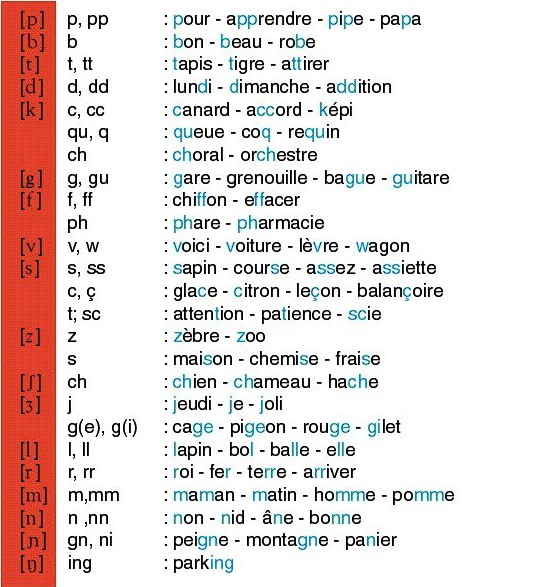
Pronunciation of consonants
Using the table below, have fun pronouncing the French consonants. You'll see that each consonant can be spelled in different ways. The consonant is often doubled, but the sound remains the same.
Difficult letters for beginners
In the French alphabet, there are some letters that are harder to pronounce. If you're a beginner, depending on your native language, some of them may seem more difficult to pronounce.
- Take the letter “r” [air], for example.une rue
- Combinations of two consonants can be difficult to pronounce in French, such as “cr,” “tr,” and “dr.” mettre l’audio : creux / très/ordre
- Reading the combination of two vowels as “oe” may seem difficult, as in the words ‘boeuf’ and “soeur”
- The combination of the letters “o” and “i” makes the sound [wa] in French. It's important to get the hang of it. Here are some examples: roi, boire, choix
French accents: a key element of pronunciation
As explained earlier, accents are an integral part of the French alphabet. In fact, the accents on the letter “e” are a defining feature of our language and are fundamental to learning French.
Types of accents (é, è, ê, ç, à…)
The letter “e” in the French alphabet is considered the one with the most accents. As you know, the letter “e” is pronounced [e] =
- Also, the first accent is the acute accent on the letter e = é. We say: e e accent aigu .To pronounce it, your lips form a slight smile. As in the word “café.” mettre l’audio
- We have the e with a grave accent = è. The mouth is open and the chin is lowered. As in the word “mère.” mettre l’audio
- Finally, the e with a circumflex accent = ê. It is pronounced the same way as é. Ex: fête. This accent marks the old spelling of certain words in Old French. La fête was spelled la feste in the Middle Ages. Play audio.
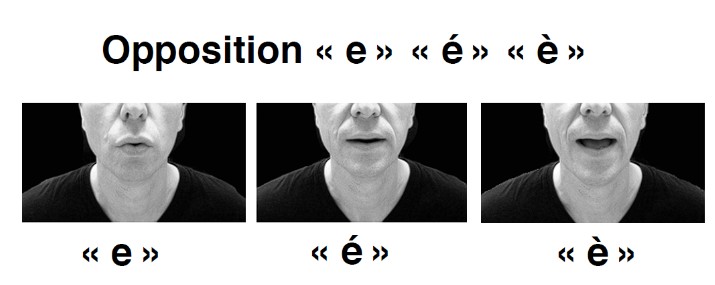
It’s time to practice! Listen and repeat the accents while looking at the photo to help you position your lips correctly. Let’s start by “e” then “é” and “è/ê”- listen and repeat. You should be able to understand the different accents. Practice with the picture to practise the mouth position until you get the right sound.
The cedilla in French is another accent. The cedilla (¸) is used only with the letter c, before the vowels a, o, and u. The cedilla indicates that the c should not be pronounced [k], but rather [s]. Example: François, leçon, glaçon
How accents change pronunciation and meaning
They're very important because they'll help you pronounce words correctly and, above all, make sure you're understood. Example: il a mangé / il mange. In French, these two don't mean the same thing. “Il a mangé” is in the past tense. The action is finished. Whereas” il mange” is in the present tense.
Common mistakes in French alphabet pronunciation
Many learners assume French letters sound like English ones—but that’s where problems begin. Some of the most common mistakes include:
- Confusing vowel sounds: Letters like E, U, and OU don’t match English equivalents. For example, U in French is pronounced with rounded lips, not like “you.”
- Silent endings influence assumptions: Learners expect final consonants to be pronounced when spelling words, even though French often drops them in speech. Example: enfants, plat mettre l’audio
- Mispronouncing nasal sounds: Combinations like AN, ON, and IN are nasalized, not pronounced as separate vowel + consonant. example: enfant/ pont/pin mettre l’audio
- Mixing up similar-sounding letters: Letters like G (gé) and J (ji) or C (cé) and S (esse) can easily be confused.
English speakers tend to fall into predictable traps: ( Comparisons with English speakers)
- Over-pronouncing consonants: English habits lead to pronouncing letters too sharply, while French sounds are often softer.
- Struggling with “R”: The French R is produced in the throat, unlike the English R formed near the front of the mouth.
- Difficulty with vowel precision: English has many diphthongs (gliding vowels), while French vowels are usually pure and steady.
- Letter name interference: For example, English speakers may say “zee” instead of zède for the letter Z.
Examples of words for each letter
Structured list with examples
- A- [a] arbre
- B- [bé] bon
- C-[sé] canard
- D-[dé] donner
- E-[e] cheveu
- F-[aif] farine
- G-[jé] cage
- H-[ach] hache
- I-[i] image
- J-[ji] joli
- k- [ka] kilo
- L-[ail] lapin
- M- [aim] maman
- N [ain] nuage
- O [eau] opéra
- P [pé] papa
- Q [ku] coq
- R [air] requin
- S [ais] souris
- T [té] tomate
- U [u] univers
- V [vé] valise
- W [double v] wagon
- X [x] xénophone
- Y [igreck] yeux
- Z [zaid] zoo.
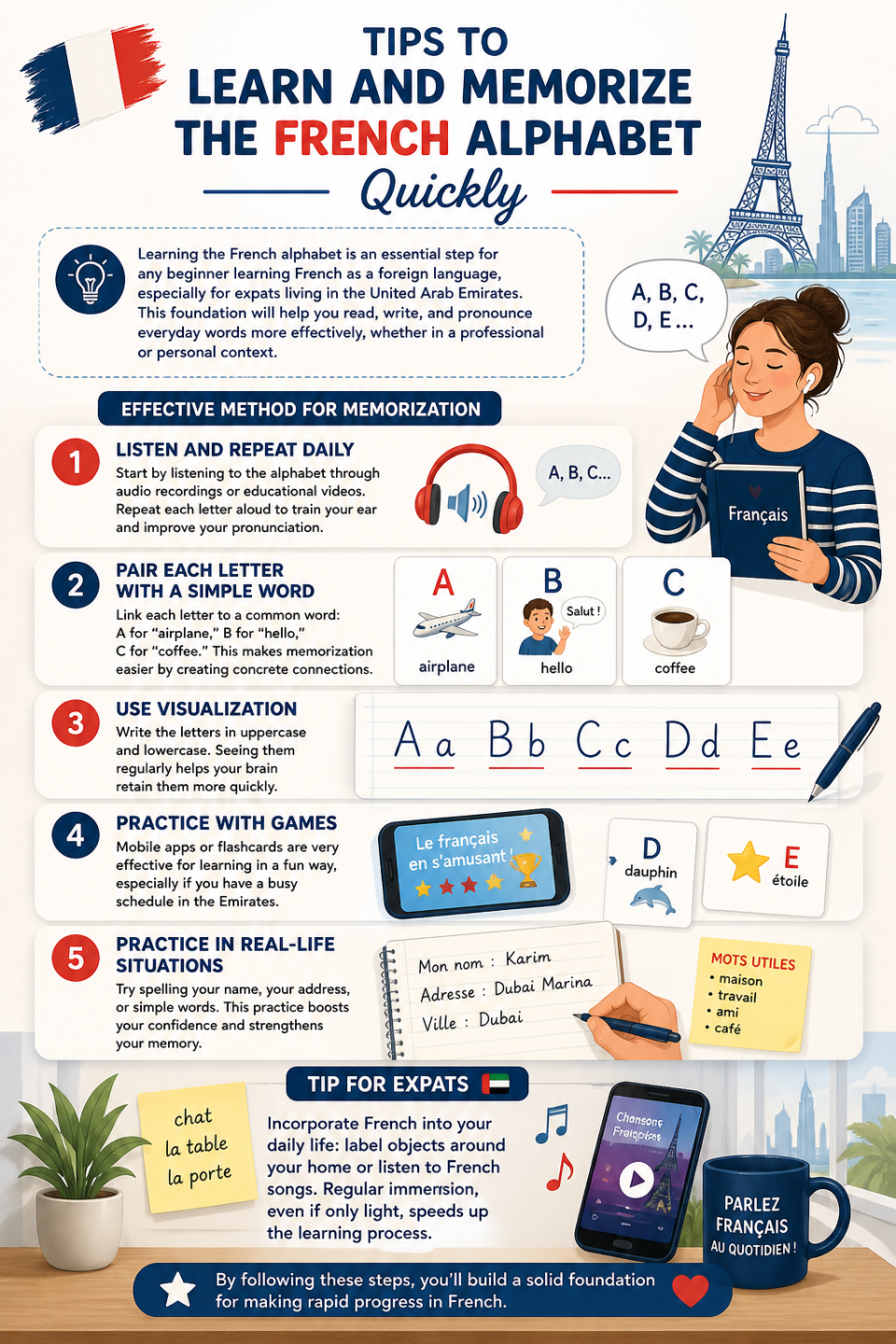
Tips to learn and memorize the French alphabet quickly
Learning the French alphabet is an essential step for any beginner learning French as a foreign language, especially for expats living in the United Arab Emirates. This foundation will help you read, write, and pronounce everyday words more effectively, whether in a professional or personal context.
Effective Method for Memorization
- 1. Listen and repeat daily
Start by listening to the alphabet through audio recordings or educational videos. Repeat each letter aloud to train your ear and improve your pronunciation. - 2. Pair each letter with a simple word
Link each letter to a common word: A for “airplane,” B for “hello,” C for “coffee.” This makes memorization easier by creating concrete connections. - 3. Use visualization
Write the letters in uppercase and lowercase. Seeing them regularly helps your brain retain them more quickly. - 4. Practice with games
Mobile apps or flashcards are very effective for learning in a fun way, especially if you have a busy schedule in the Emirates. - 5. Practice in real-life situations
Try spelling your name, your address, or simple words. This practice boosts your confidence and strengthens your memory.
Tip for expats
Incorporate French into your daily life: label objects around your home or listen to French songs. Regular immersion, even if only light, speeds up the learning process.
By following these steps, you'll build a solid foundation for making rapid progress in French.
FAQ about the French alphabet
For expats living in the United Arab Emirates, getting started with French often begins with a simple question: how do you master the alphabet and its pronunciation? Here are some clear answers to help you make effective progress.
How many letters are in the French alphabet ?
Why are some letters silent in French ?
What are the hardest letters to pronounce in French ?
How can you quickly improve your French pronunciation ?
With regular practice and the right techniques, you’ll gain confidence and fluency.
